Well, in my world they do, so tough.
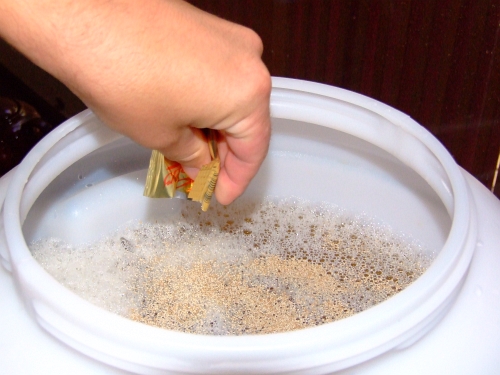
Firstly, about the fermented lemons from last post. Yes, Liz, you can actually drink it. And it tastes good too. But to make it taste even better you boil the bejeezers out of the water, sliced lemons, and sugar. Then you let it cool to around 75 F. Then you skim out all the rinds and such. THEN you add the yeast.
But that's a lot more work and lot more time consuming. That's why I posted the "quick 'n' easy, cheap 'n' sleazy" method first. Not that I'm any of those, ahem.
We'll be bottling our beer today (or at least when you read this, could be tomorrow if you don't check in regularly).
But before we do that, how's about a picture of the bottom of the pool?
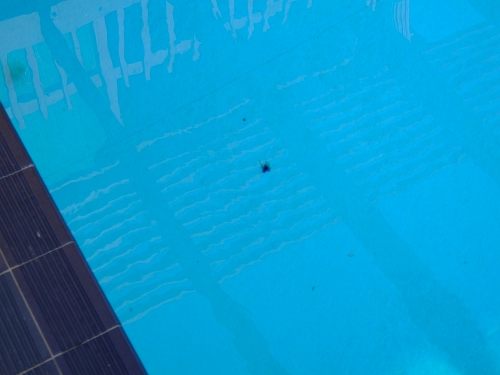
But what's that black speck in the picture? Hmmmmm, let's just zoom in a bit:
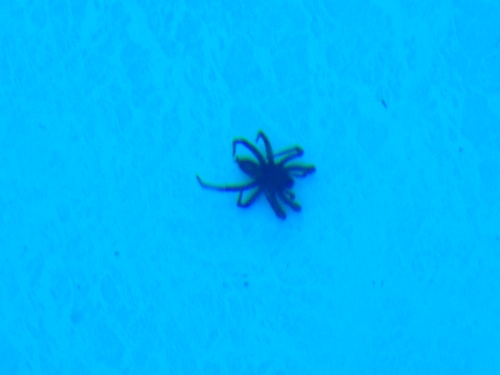
Oh, it's just a drowned huntsman spider, no worries.
Here's a shot of the side of the pool:
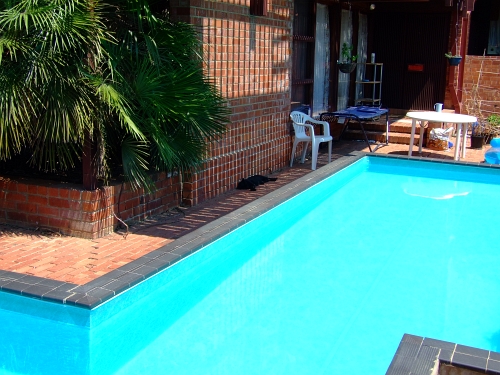
But what's that black speck in the picture? Hmmmmm, let's just zoom in a bit:
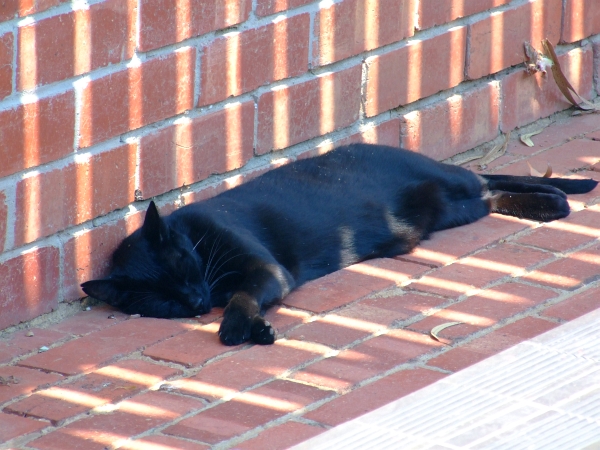
Oh, it's just the cat doing what he does best on hot days... toasting himself on the hot bricks that I can't even walk on barefoot!
Hey cat! Wake up! There's an evil creature about looking to kill a critter!
Here comes Sarah Palin!!! Watch out!
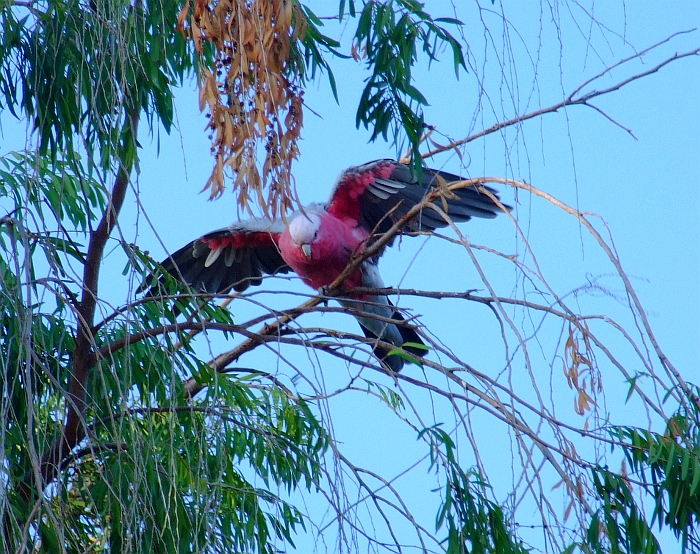
I'll have you know that cat did escape and has lived to sleep another day away.
Now for a deft switching of topics... BEER! Specifically the bottling of the brew.
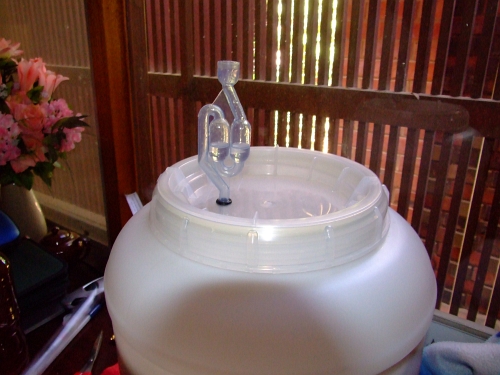
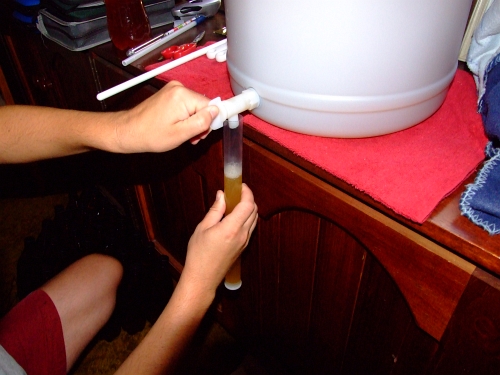
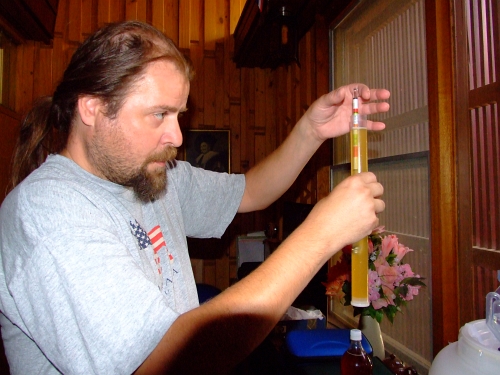
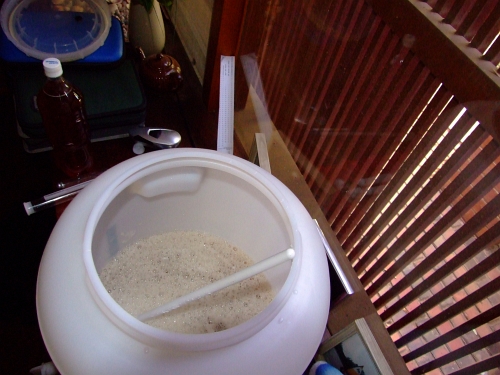
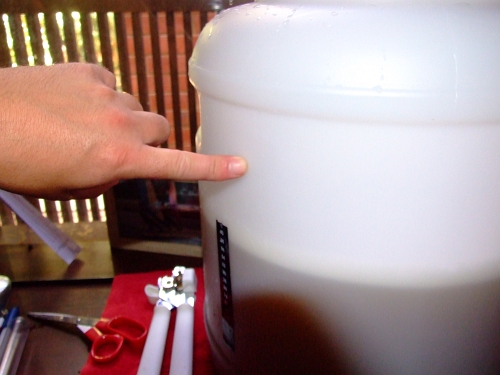
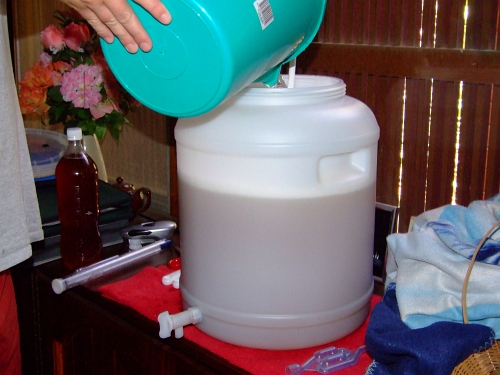
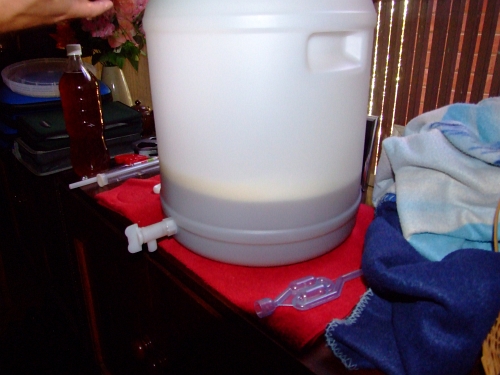
This is what the primary fermenter looks like after seven days. I've been taking an SG reading each day and this ale ended up stabilising at 1012 for 3 days. It's ready! It started at 1052 so the alcohol content comes to 5.86%.
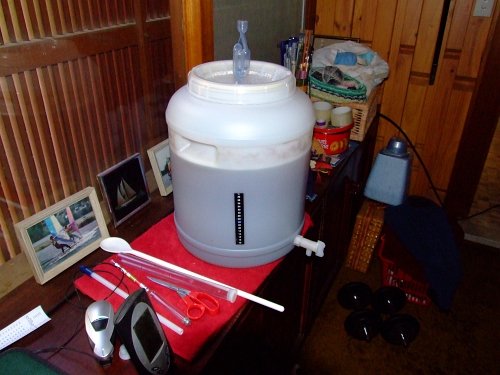
It's going to go into the bottles of the top two boxes.
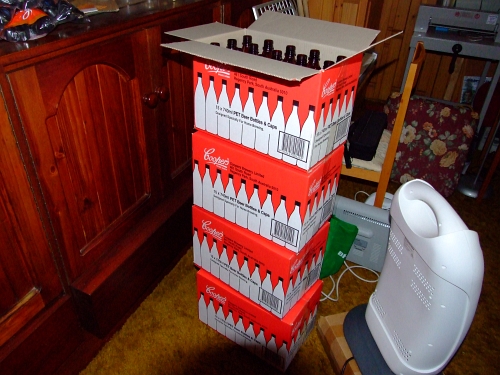
Unlike wussy sized beer bottles, these hold 750 mls each. So the 30 bottles would be equal to 60 US sized beers.
Coopers makes it really easy to get just the right amount of sugar for the secondary fermentation in the bottles:
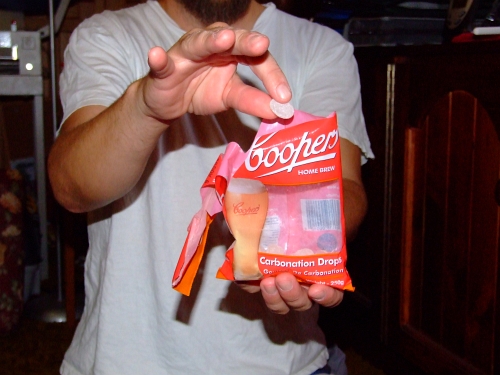
Pure, 100% glucose. Unlike the brewing sugar which is dextrose and maltodextrose.
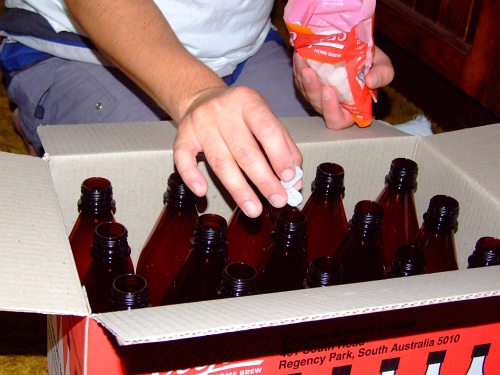
Each Aussie sized bottle gets 2 pellets, whereas if I was bottling little weenie 12 ounce bottles I'd only need one per bottle:
Now to get the beer into the bottles... Heck that's easy, just unscrew the lid and start pouring! I joke.
Again, Coopers makes it easy. The have a attachment that fits onto the spigot that has a little float valve at the bottom. That way not only are you not turning the spigot on and off, but you are filling the bottle from the bottom up. That way it doesn't foam and waste space in the bottle that could otherwise be used for more beer.
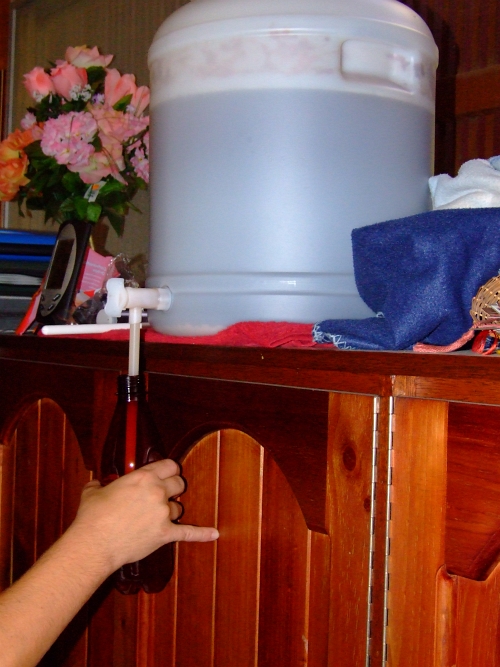
Yes, I'm dainty...
You fill the bottle all the way to the top and then remove the bottle. The space the bottling tube used will give you the perfect amount of airspace at the top of the bottle. Cap that sucker tightly:
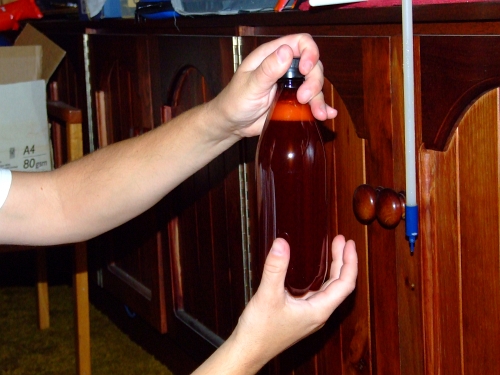
And then you do it again... and again... and again... Eventually the flow will become very slow. That's when you get WP to tilt the fermenter at an angle.
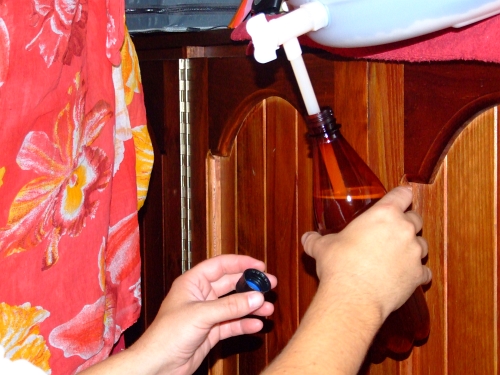
Soon WP becomes bored, so you have BIL take over the angling duties:
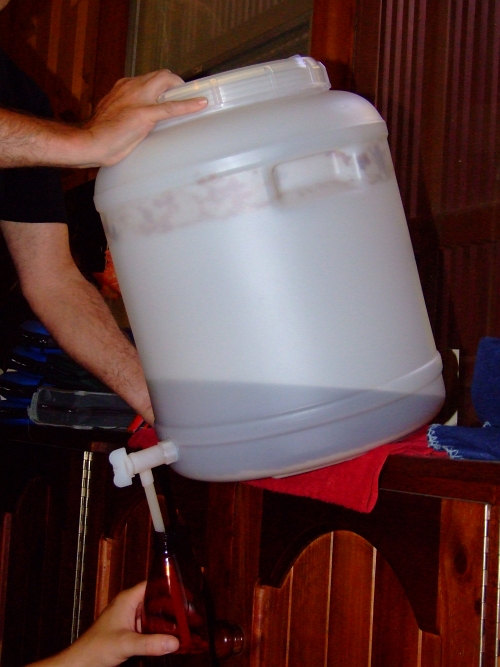
See that pale sludge in the bottom of the fermenter? When you are done make sure you keep some! Wonderful active yeast that makes very tasty bread!
And when you are done you'll have this:
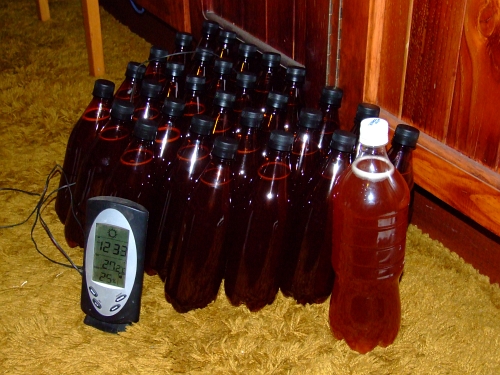
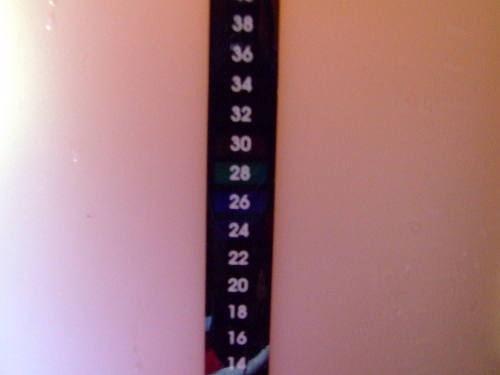
The bottles need to sit for a week in a warm spot. Hence the temp gauge on the floor. 27 C is the upper limit you want.
This batch of ale went from cloudy to clear after 6 days in the bottle. Waa-Laa! Beer!